

Introduction
A new industry report highlighted a personal injury firm expanding its motorcycle accident work—and the media picked it up. Commercial Appeal’s coverage shows rider-focused advocacy getting more airtime in the injury world (Commercial Appeal: Sullivan Brill Personal Injury Attorneys Expands Motorcycle Accident Representation, https://news.google.com/rss/articles/CBMi2wFBVV95cUxOZVB0eXhBWmxwNlVJd0JjNnZSMlcycFIyZUx1TW8wNlQwbTRldW5oM3RPSE1RLUhKLTJQTWhYQUlWc0lYdC1xZlJMZDQ5dmNDT0dfYXE1UkM4dlpWMm9UajdIUmprOXpHVkxWQmxvcWV1dG5EQnhPMjN5d1pGOXJINE50SjVKeGwxaGVIa3BCSnpKcWtmWktvTW90b1lfdDJvcnZrYXVqYXFMT0NlTXJPd05tZmxSdF81MmFHSjFkM1I4LUFQQS1EUUx1UmdETzBBVk1PM1JLUlJXbVE?oc=5). What does that mean for riders in Nassau and Suffolk?

Here’s the upshot: more eyes on motorcycle claims can change how insurers defend cases—and how you should prepare yours. This guide walks through the steps after a crash, how New York’s rules hit motorcycle claims differently, what damages you can seek, and how Palacios Law Group supports riders from the LIE to Montauk Highway.
Disclaimer: This article provides general information and is not legal advice. Every case is unique. For a free consultation about your situation, contact Palacios Law Group.
Why are motorcycle accident legal services expanding—and why should Long Island riders care?
Short answer: More firms are investing in motorcycle litigation. That can shift insurer strategies and raise the bar for evidence, negotiations, and documentation for Long Island riders (Commercial Appeal, above).
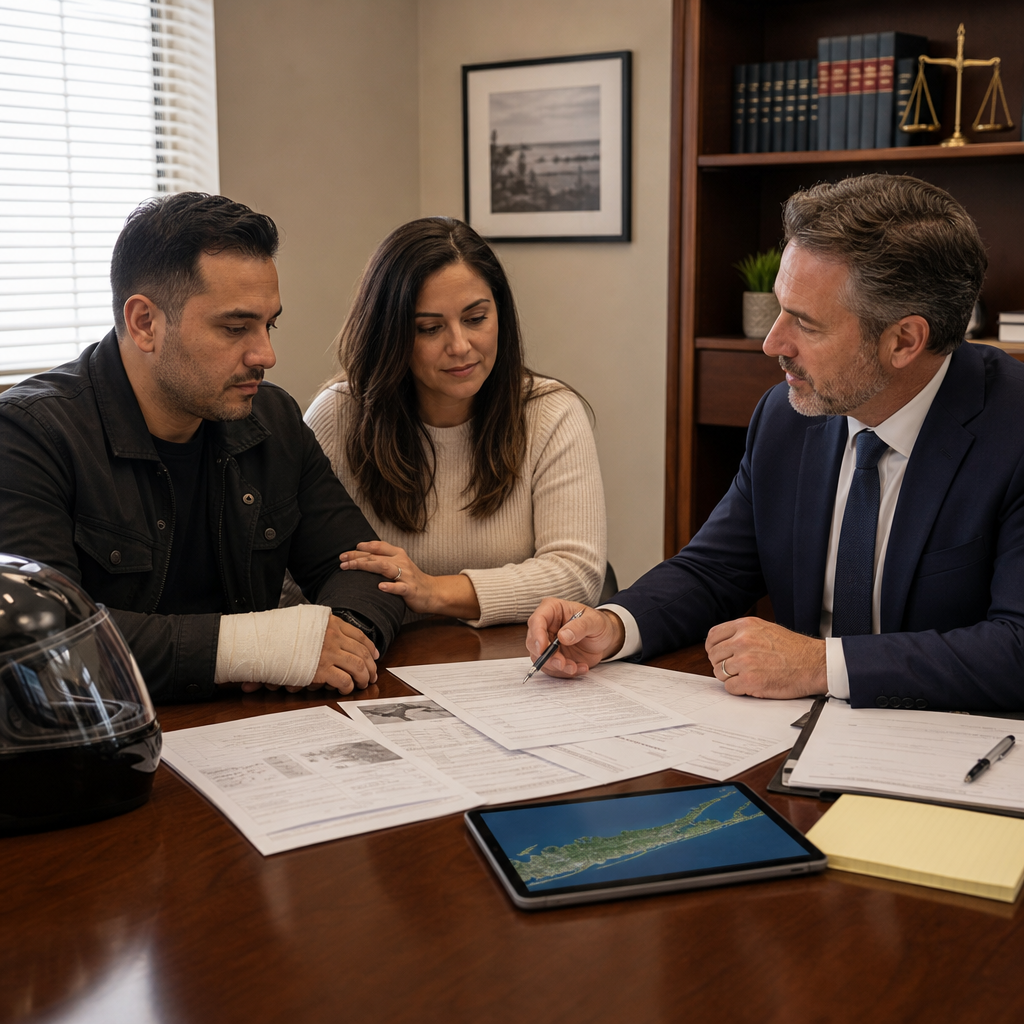
Why the rush? Motorcycle crashes often involve serious injuries, higher medical costs, and squabbles over fault. When firms double down on these cases, carriers tend to sharpen their defenses—digging into causation, helmet use, roadway design, and comparative negligence. If you were hit near the Sunrise or cruising Ocean Parkway, early legal guidance and tight evidence control can make a real difference.
What the national trend suggests
- More rider-centered investigations, including rapid scene work and black-box/ECM retrieval when available.
- Heavier use of accident reconstruction and biomechanical experts to parse speed, visibility, and evasive maneuvers.
- Closer review of medical records to dispute treatment necessity and permanency.
Commercial Appeal reports at least one firm trumpeting its motorcycle expansion, a hint at where the industry is headed (Commercial Appeal, above). On Long Island, that can mean tougher fights—but also more specialized advocacy in your corner.
How this affects Long Island cases
- Faster insurer outreach for statements and authorizations—often within days.
- Increased focus on lane position, conspicuity, braking distances, and sightlines.
- Pushback on pain-and-suffering values and long-term care estimates.
Riding the Northern State, Southern State, LIE, or Sunrise Highway? A focused claim plan and prompt medical documentation can protect your case. Explore our location pages for convenient support: Long Island, Queens, Brooklyn, Bronx, and Manhattan.
What should you do immediately after a motorcycle crash on Long Island?
Short answer: Call 911, get safe, accept medical care, document the scene, collect witness info, don’t admit fault, and contact a motorcycle accident attorney quickly.
Quick, steady action sets the stage for a stronger claim. Even if you feel “okay,” treat the scene like a one-shot opportunity to capture evidence.
Step-by-step checklist
- Call 911 for police and EMS. Make sure an official report is created.
- Move to safety if you can. Use hazards or flares if available.
- Accept medical evaluation. Adrenaline hides injuries.
- Document the scene: photos of your bike, other vehicles, skid marks, debris, lights/signs, weather, lighting, and license plates.
- Exchange info: names, insurance, and driver’s license details.
- Identify witnesses and get contact information.
- Preserve your gear. Don’t fix or toss your helmet, jacket, boots, or gloves—they’re evidence.
- Skip social media posts about the crash.
- Speak with counsel before any recorded statement.
Why timing matters
Insurers often ask for early statements and broad medical authorizations. Signing too fast can limit your options. Early counsel can lock down photos, nearby camera footage, 911 audio, and key medical records—before they disappear.
For tailored help, visit our Personal Injury practice page and our contact page. Our attorneys, including Jose Palacios and Sandra McGill, handle motorcycle crash cases throughout Long Island.
How do New York liability and insurance rules impact motorcycle claims?
Short answer: Motorcyclists generally don’t get standard no-fault benefits in New York, so claims often target the at-fault driver’s liability coverage; comparative negligence can reduce recovery, and strict deadlines apply. Get case-specific guidance from counsel.
Motorcycles sit in a different bucket than cars for certain benefits and rules. Knowing the basics helps you avoid claim pitfalls.
Key concepts riders often confront
- No-fault inapplicability: Riders typically can’t access standard PIP. Medical bills and lost wages may run through health insurance, med-pay (if any), or third-party liability claims. Confirm specifics with counsel for your facts.
- Comparative fault: New York’s comparative negligence can reduce damages by your share of fault. Expect disputes over visibility, speed, and lane position.
- UM/UIM: Your own Uninsured/Underinsured Motorist coverage can be crucial if the driver is uninsured or underinsured.
- Statutes and deadlines: Tight notice rules and statutes of limitation apply. Municipal claims often require early notices of claim.
With more attention on motorcycle cases, insurers may get even more rigorous. Keep helmet and gear evidence, grab dashcam or ECM data where available, and follow through on medical care. For Long Island-specific help, see our Long Island location page and reach us via our contact portal.
What damages can injured Long Island riders seek after a crash?
Short answer: Economic damages (medical bills, lost income) and non-economic damages (pain and suffering, loss of enjoyment). Serious cases may include future care, diminished earning capacity, and, when applicable, wrongful death damages.
Motorcycle injuries can be life-altering. Solid documentation connects your day-to-day losses to the medical record and the law.
Common economic losses
- Emergency transport, hospital care, surgery, imaging, and rehabilitation
- Prescription medications and medical devices
- Lost wages, overtime, and self-employment income
- Diminished earning capacity backed by vocational/financial experts
- Home modifications, mobility aids, and in-home care
Non-economic harms
- Physical pain and mental anguish
- Loss of enjoyment of life and hobbies (riding, sports, family time)
- Scarring and disfigurement
Special considerations
- Traumatic brain injury and concussion protocols
- Complex orthopedic injuries with staged surgeries
- Psychological injuries such as PTSD and anxiety related to travel or riding
Our Personal Injury team partners with treating doctors and experts to document these losses. If a crash triggers family or immigration concerns—like caregiving strain or status issues—our Family Law and Immigration teams can support those needs, too.
How do you build a strong motorcycle accident case in New York?
Short answer: Lock down evidence immediately, build a thorough medical record, identify every insurance policy, and use experts as needed to prove liability and damages.
Evidence and investigation
- Police report, 911 audio, dispatch logs
- Scene photos, vehicle damage, measurements
- Video from traffic, storefront, or residential cameras
- Event data/ECM where available and applicable
- Helmet and gear inspections
- Weather, lighting, and roadway condition documentation
Insurance and defendant identification
- At-fault driver’s policy and any employer/corporate coverage
- Owner liability if the vehicle was borrowed or leased
- UM/UIM and med-pay on your own policy
- Potential roadway defect or municipal claims (short deadlines apply)
Medical and damages development
- Early imaging and specialist referrals
- Tracking out-of-pocket costs and benefit denials
- Vocational analysis for return-to-work issues
- Life-care planning for long-term needs
With more firms entering the motorcycle space (Commercial Appeal, above), carriers may intensify reviews. A proactive strategy keeps your evidence front and center—and your claim moving.
If criminal charges arise from the crash (a citation or arrest), our Criminal Defense team coordinates with the civil case to protect your rights. Property or title issues tied to the bike? Our Real Estate practice can advise on liens and related concerns.
Do settlement timelines change when more firms focus on motorcycle cases?
Short answer: It depends. Clear-liability cases with clean documentation can resolve quickly; serious or disputed cases, especially with multiple experts, often take longer.
Factors influencing timing
- Liability clarity (rear-end vs. disputed intersection)
- Injury severity and the need to reach maximum medical improvement
- Availability of video, ECM data, and eyewitnesses
- Insurer workload and defense posture as motorcycle dockets grow
- Court schedules if litigation is needed
Practical tips to keep momentum
- Get prompt, consistent medical care
- Respond quickly to your attorney’s document requests
- Keep a claim journal: pain levels, appointments, work impact
- Consider early mediation when liability is strong and records are complete
We map likely timelines and decision points with each client—from pre-suit talks to trial. Meet with Jose Palacios or Sandra McGill to plan your path.
---
Frequently Asked Questions
Q1: What’s the first legal step after a motorcycle crash on Long Island?
A1: After urgent medical care and a police report, consult a motorcycle accident attorney before giving insurer statements. Early counsel preserves evidence, identifies coverage, and protects claim value—while securing key videos or 911 audio.
Q2: Are Long Island motorcyclists covered by New York no-fault benefits?
A2: Riders are often excluded from standard no-fault (PIP). Many pursue third-party claims against at-fault drivers and lean on health insurance, med-pay, or UM/UIM where available. Review your policy with counsel.
Q3: How is fault determined in a New York motorcycle accident?
A3: Through police reports, scene evidence, witness accounts, video, and expert analysis. Because comparative negligence can reduce recovery, documenting visibility, lane position, and speed is key.
Q4: What damages can I claim for a motorcycle accident on Long Island?
A4: Medical bills, lost income, and non-economic damages like pain and suffering. Severe injuries may add future care and diminished earning capacity. Strong medical and expert support anchors valuation.
Q5: How long do motorcycle accident cases take to settle?
A5: Ranges from months for clear cases to longer for contested or serious injuries. Variables include insurer strategy, court calendars, and medical recovery timelines.
Q6: Should I talk to the other driver’s insurer after the crash?
A6: Not before speaking with counsel. Statements can be used against you. Your attorney can manage communications and limit overbroad authorizations.
Q7: What if the at-fault driver has minimal insurance?
A7: Your UIM coverage may bridge the gap. Your lawyer will evaluate all available policies, including potential umbrella coverage.
Q8: Can Palacios Law Group help if there’s a related ticket or arrest?
A8: Yes. Our civil and Criminal Defense team coordinate to protect your rights in both matters.
---
How Palacios Law Group Can Help
If you or a loved one was hurt in a motorcycle crash on Long Island, we’re ready to step in. We offer free consultations, contingency fees for injury cases, and bilingual support—Se Habla Español. Call us or reach out through our contact page. We represent riders across Long Island, Queens, Brooklyn, Bronx, and Manhattan.
This article is for informational purposes only and does not constitute legal advice. Past results do not guarantee a similar outcome.
---